

How Dire Straits finally led me to buy an EV
- Apr 14
- 3 min read
It seems obvious we are all in dire straits now – so it made me think of some of the other straits that have been critical to mankind. The straits of Gib, Magellan, Malacca, Bosphorous, Bougainville, Bering, Cabot, Cook, Messina etc; most of them, significant to the world of trade and of course conflict. A geographical pinch point, as Damian Valdez suggested recently in an article entitled ‘Chokepoints are the True Crossroads of History’ (published on April 8th on Engelsberg Ideas*) is often the cause of war.
A good example is the centuries-long battle between Ottoman and Habsburg for control of the Danube, in 1867 resulting in victory for the Kaiserlich-Königlich dual monarchy of the Austro-Hungarian Empire with its twin Danubian capitals of Budapest and Vienna and consequent control of tolls and the traffic of weapons and trade. That all ended of course in 1918, a state of affairs from which neither Hungary or Austria has ever really recovered.
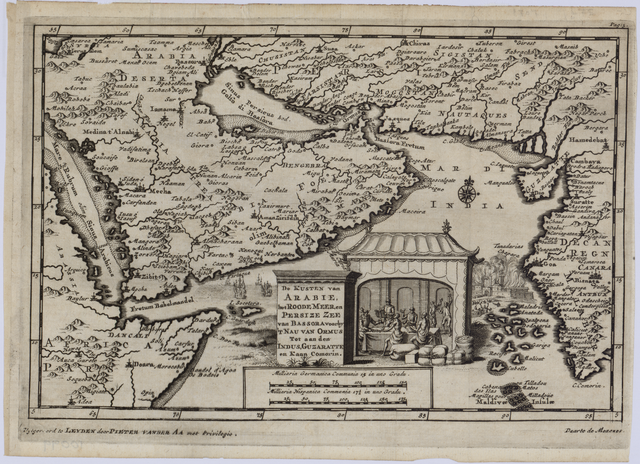
So, to Hormuz - a strait that most of us, until recently, were content to think of as little as possible. In the 17th century a battleground between the combined English and Dutch East India Companies’ interests and those of the Ottomans and for two centuries from the 16th century wars between the Portuguese and the Safavid rulers of Persia. As any English freeholder who happens to share a path, hedge, fence, gully, gable or wall with a neighbour knows, a shared asset is an unexploded device – one in which tip-toeing reassurance and lip-biting usually pays off better than hand-grenades, metaphorical or actual.
No such luck in Hormuz.
The only thing that can be said of the present conflict is that it has now provided a new blanket excuse for almost any domestic ill – anything from the price of a cup of coffee to a train delay may legitimately be met with – ‘Sorry mate – Straits of Hormuz!’
On my personal front it’s not been unhelpful. The war and nothing else finally got me to turn to electricity as my fuel of choice. My diesel Land Rover Freelander with 198,000 miles on the clock will now not see 200,000. I’ve ordered solar panels, an 18 kWh battery, a Podpoint, and a Citroen C3 Aircross with 250 miles of range. All I need now is a well. As I live in a hamlet called Pedwell which lies at the bottom of the beautiful Polden Hills in Somerset, I do not believe this should be too much of a problem. Our area, if nothing else, is known for water; and most of our neighbours have an ancient well waiting to be brought back into action.
If I had to make just one prediction, it would be that the present war will supercharge EV adoption.
Local to me, a promoter is seeking to install 340 acres of glass panels on our south-facing flat ancient peatlands because the area is empty of people and dwellings, and close to the grid. I am part of a group who for the last three years has opposed this because we value these lands as the habitat of the common crane which was re-introduced into Britain in 2014, and the feeding grounds for overwintering starlings, as well as home to protected species such as the lapwing, which enjoy having their feet wet. We think solar has a place - but not here. Rather on the roofs of homes like mine, or warehouses.
It will be interesting whether my eagerly awaited panels will arrive on time at the end of the month, but at least I know the supplier will have a cast iron excuse…
‘Sorry mate! Straits of Hormuz!’
By Anthony Lipmann
A version of this article was also published on www.lord-copper.com on 14th April 2026
* Metal people may be interested to note that Engelsberg Ideas (founded in 2020) derives its funding from the Axel and Margaret Ax:son Johnson Foundation for Public Benefit (1947) a private entity for promoting scientific and scholarly research which in turn owes its origins to Axel Johnson, the industrial conglomerate founded in 1873.


Comments